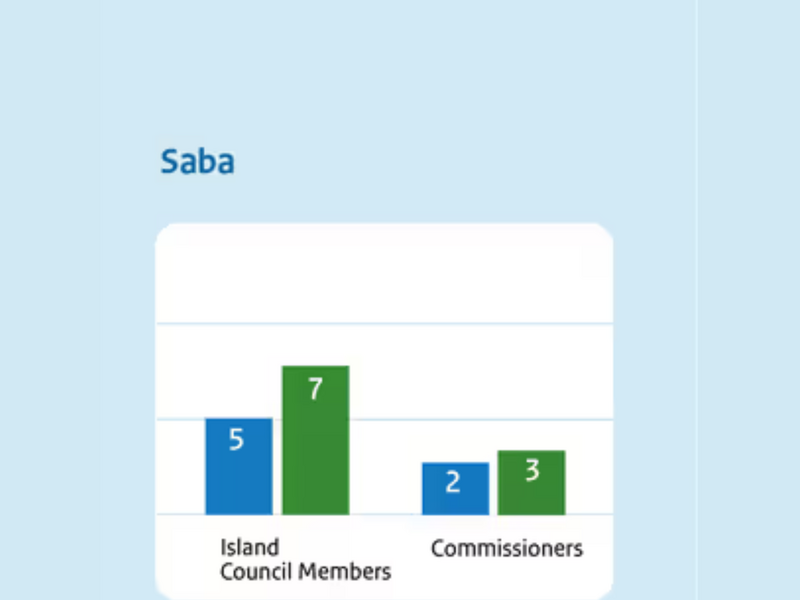
In its response, the Executive Council emphasized that the conference in De Bilt took place in 2024, at a time when the proposed agreement allowed for a three-year preparation period before implementation. That timeline was essential to allow the islands to responsibly prepare for these far-reaching institutional changes. With just over one year remaining before the next election, there is now insufficient time to meet the practical, financial, and organizational requirements associated with an expansion of the Executive Council and Island Council.
The Executive Council further noted that during the 2024 conference, Saba reluctantly agreed to the expansion of the councils because it formed a part of a wider package of reforms, which included the removal of the role of Rijksvertegenwoordiger (Kingdom Representative). That position of Kingdom Representative was then maintained unilaterally by the Ministry of the Interior and Kingdom Relations (BZK), despite the expressed wishes of the islands.
The Council argued that “change and growth cannot be pursued as a one-sided agenda”. Instead, a call was made for greater differentiation among the BES islands, as each island faces its own unique circumstances.
In its letter, the Executive Council also urged BZK to redirect its focus towards more pressing challenges facing the island such as high cost of living, lack of affordable and reliable connectivity, and recurring staff shortages at Saba’s schools at the start of each academic year.
The Executive Council went on to say that it respects the agreements reached in De Bilt in 2024 and does not seek to undermine them, but has requested amendments to allow for island-specific entry for the implementation of the proposed expansion changes. Under such an approach, Sint Eustatius, for example, could move forward with the expansion as early as 2027, while Saba would be granted until 2031 to responsibly implement the changes.
“Differentiation in timing does not weaken democracy,” the Executive Council stated, “it strengthens it by ensuring that reforms are introduced when institutions are prepared, resources are available, and local priorities are not displaced.”
To view the full letter, please download via the Related Files below.