The cost of living continues to be an important concern across the community, for residents, for businesses, and the Public Entity. While there is no single factor that determines the price of goods on Saba, understanding how products reach the island and what influences their cost can help provide a clearer picture of why prices sometimes rise and fall.
Global Market with Local Effects
Saba is a small island at the end of the supply chain and the prices residents pay are often influenced by events taking place far from our island.
A recent example can be seen in the price of eggs. Over the past years, outbreaks of bird flu affected poultry farms in several countries, therein reducing egg production and creating shortages in markets. As supply decreased, the demand remained high, and as a result, egg prices drastically increased in different countries around the world, including here on Saba.
Because Saba imports the majority of its food and consumer products, increases in global prices are often reflected throughout the supply chain. Importers pay more, transportation costs increase, retailers face higher purchasing costs, and ultimately residents see the higher prices on the store shelves.
This connection between global events and local prices is not always visible to consumers, but it is one of the many factors that influence the cost of living on Saba. Future editions of this series will take a closer look at other topics, including shipping costs, fuel prices, supply chains, and the unique challenges faced by small island economies.
What Local Retailers are Already Doing
Public Entity Saba met with local retailers recently to discuss the steps being taken to help keep products accessible to residents and to gain a better understanding of the challenges businesses face in maintaining reliable supplies and products for the community.
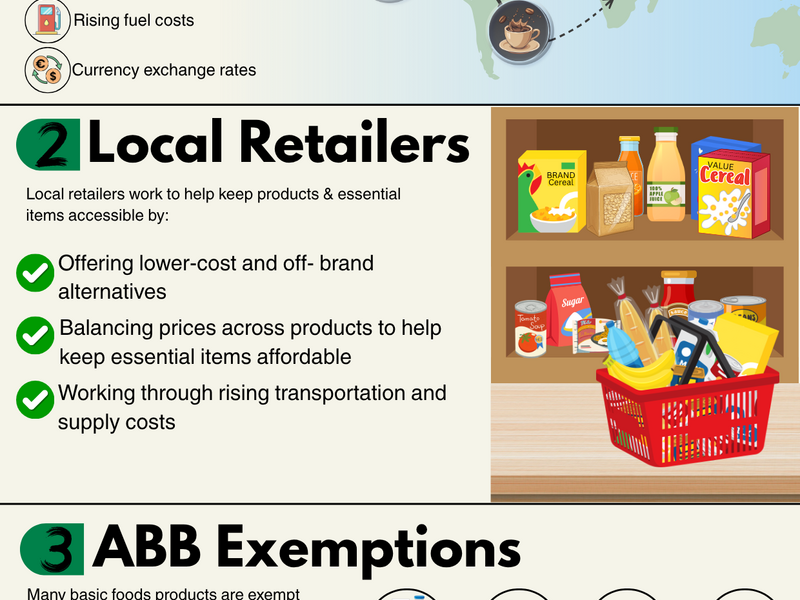
During discussions, retailers shared that keeping prices low for essential goods involves balancing costs across different products. In practice, this can mean earning a smaller profit margin on those essential goods, like rice, milk, bread, eggs, while relying on other products to help offset operating costs. This approach, known as cross-subsidization helps keep everyday necessities more accessible to residents.
Local retailers also provide lower-cost alternatives alongside well-known brands. These products, often referred to as generic or store-brand items, can offer additional choices at different price points. In many cases, selecting these alternatives can lead to meaningful savings on household grocery bills over time. Residents are encouraged to compare products, stores, and consider alternative brands.
Many Basic Food Items Are Exempt from ABB
Many residents might not be aware that a wide range of basic food products are already exempt from ABB. This exemption helps reduce the final price paid by consumers on many everyday necessities.
Examples of ABB-exempt products include:
- Milk and dairy products
- Eggs and honey
- Fruits and vegetables
- Coffee, tea, and spices
- Cereals and flour products
- Cooking oils and edible fats
- Sugar and confectionery products
- Various grain, flour, starch, and milk-based food preparations
You Are Invited to a Town Hall on Cost of Living
Residents are invited to attend a town hall on the cost of living on Monday, June 22, 2026 at 6:30 PM at the Eugenius Johnson Center.
The session will be led by an independent economist and will provide residents with an opportunity to learn more about the factors influencing prices on Saba and ask questions directly.
The town hall will also be livestreamed for those unable to attend in person. Additional details will be shared leading up to the event.
During the meeting with retailers, Commissioner Bruce Zagers emphasized the importance of understanding the broader factors that affect prices on the island. Zagers stated “the cost of living continues to be an important concern for our community. Residents feel it when they shop, businesses experience it through rising operating costs, and the government sees its impact across many areas of daily life. The reality is that prices are influenced by a combination of regional and international factors. Understanding those connections helps provide insight into the challenges faced both by consumers and businesses on Saba.”